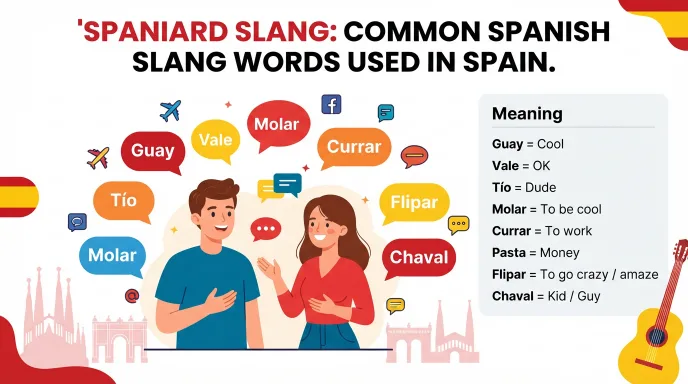
Spaniard slang refers to informal words and expressions commonly used by people in Spain during everyday conversations. These slang terms often differ from standard Spanish and may not be understood in every Spanish-speaking country.
Many people search for Spaniard slang because they hear these expressions in movies, TV shows, travel videos, social media, or while visiting Spain.
Learning a few common slang words can help you understand native speakers, sound more natural, and avoid confusion. In this guide, you’ll discover the meaning of popular Spaniard slang, where it’s used, if it’s polite, and how to use it correctly in real-life situations.
Quick Answer: Spaniard Slang
Spaniard slang is a collection of informal Spanish words and phrases widely used in Spain. These expressions help speakers sound casual and friendly, but some are regional or informal, so they may not be suitable in formal conversations.
What Does Spaniard Slang Mean?
Spaniard slang means the everyday informal vocabulary used by people in Spain. Unlike standard Spanish taught in most language classes, slang changes depending on age, region, and social groups.
Many slang words have simple meanings but add personality and emotion to conversations. For example, instead of saying something is “very good,” a Spaniard might simply say guay.
Slang is common in:
- Daily conversations
- Text messages
- Social media
- TikTok videos
- YouTube content
- Casual workplace chats
- University and school conversations
- Gaming and online communities
While many expressions are understood across Spain, some are more common in cities like Madrid, Barcelona, Valencia, or Seville.
Common Spaniard Slang Words
The table below introduces some of the most popular slang words you’ll hear in Spain.
| Slang | Meaning | Example |
| Guay | Cool, awesome | That concert was guay! |
| Tío / Tía | Dude, mate, bro, girl | Hey, tío, how are you? |
| Vale | Okay, sure | Vale, see you later. |
| Currar | To work | I have to currar tomorrow. |
| Pasta | Money | I don’t have enough pasta. |
| Molar | To be cool or enjoyable | This song mola a lot. |
| Flipar | To be amazed or shocked | I flipped when I saw it. |
| Chaval | Kid, young person | That chaval plays football every day. |
| Estar de buen rollo | To get along well | We are always de buen rollo. |
| Rayarse | To overthink or worry | Don’t rayarte about it. |
Tip: Meanings can vary slightly depending on the region and the speaker’s age.
Different Types of Spaniard Slang
Not all slang in Spain is the same. Different groups use different expressions.
Everyday Slang
These words are used by almost everyone.
Examples:
- Vale
- Guay
- Tío
- Molar
Youth Slang
Teenagers and young adults often create new expressions through social media.
Examples:
- Flipar
- Rayarse
- Full equipazo (great team)
- Tremendo (awesome or impressive, depending on context)
Some youth slang becomes outdated over time, while new phrases quickly replace it.
Regional Slang
Spain has many regions, and local vocabulary can change.
For example:
- Some expressions are more common in Madrid.
- Others are heard more often in Andalusia, Catalonia, or Valencia.
- Regional languages such as Catalan, Basque, and Galician also influence local slang.
Because of this, a word popular in one city may sound unusual in another.
Where Is Spaniard Slang Commonly Used?
You’ll hear Spaniard slang in many informal settings.
| Place | How Common Is It? |
| Friends chatting | ⭐⭐⭐⭐⭐ Very common |
| Family conversations | ⭐⭐⭐⭐ Common |
| Text messages | ⭐⭐⭐⭐⭐ Very common |
| WhatsApp chats | ⭐⭐⭐⭐⭐ Very common |
| TikTok | ⭐⭐⭐⭐⭐ Very common |
| ⭐⭐⭐⭐ Common | |
| YouTube | ⭐⭐⭐⭐ Common |
| Discord | ⭐⭐⭐ Common |
| Gaming chats | ⭐⭐⭐ Common |
| School and university | ⭐⭐⭐⭐⭐ Very common |
| Business meetings | ⭐ Rare |
Slang is most appropriate in relaxed conversations. In formal situations, standard Spanish is usually the better choice.
Who Uses Spaniard Slang?
People of all ages use slang, but the type of slang often depends on the speaker.
- Teenagers often create and spread new slang through TikTok, Instagram, and gaming.
- University students use slang in daily conversations with friends.
- Adults commonly use long-established expressions like vale, tío, and guay.
- Families use many informal words at home, though older generations may prefer more traditional expressions.
Some slang words have remained popular for decades, while others disappear as language trends change.
Can You Use Spaniard Slang Outside Spain?
Yes, but use it carefully.
Many Spanish speakers from Latin America understand common Spaniard slang through movies, travel, and the internet. However, some expressions may sound unusual or have different meanings depending on the country.
For example:
- Vale is extremely common in Spain but less common in many Latin American countries.
- Guay is strongly associated with Spain.
- Tío as “dude” is mainly a Spanish usage, even though the word literally means “uncle.”
If you’re speaking with people from different Spanish-speaking countries, using standard Spanish is often the safest option.
Is Spaniard Slang Rude, Offensive, or Harmless?
Most Spaniard slang is harmless and friendly, but the tone depends on the word, the situation, and the people involved. Many expressions are used casually among friends but may sound too informal in professional or respectful settings.
Here’s a quick guide:
| Type of Slang | Safe to Use? | Best Used With |
| Friendly everyday slang (e.g., guay, vale) | ✅ Yes | Friends, classmates, family |
| Casual slang (e.g., tío, molar) | ✅ Usually | Friends and people your age |
| Strong or rude slang | ⚠️ Use with caution | Close friends only |
| Formal situations | ❌ Avoid slang | Teachers, interviews, business meetings |
If you’re learning Spanish, start with common, polite slang and avoid copying strong expressions you hear online until you understand their tone.
Real-Life Examples of Spaniard Slang
Seeing slang in context makes it much easier to understand.
Friends Meeting After School
Ana: ¡Hola, tío! ¿Qué tal?
Carlos: Todo guay. ¿Vamos al cine?
Ana: Vale, vamos.
Meaning:
- Tío = Dude / Mate
- Guay = Cool / Great
- Vale = Okay
Text Message
A: ¿Vienes esta noche?
B: Vale. Nos vemos a las ocho.
Translation:
A: Are you coming tonight?
B: Okay. See you at eight.
Talking About Work
María: Tengo que currar mañana.
Meaning:
“I have to work tomorrow.”
Here, currar is an informal alternative to the standard Spanish verb trabajar (to work).
Reacting to Good News
Pedro: ¡He ganado las entradas!
Sara: ¡Qué guay!
Translation:
Pedro: I won the tickets!
Sara: That’s awesome!
Being Surprised
Luis: Flipé cuando vi el partido.
Meaning:
“I was amazed when I saw the match.”
The verb flipar expresses surprise, excitement, or disbelief.
Gaming Chat
Player 1: Ese equipo mola mucho.
Player 2: Sí, está guay.
Meaning:
Player 1: That team is really cool.
Player 2: Yes, it’s awesome.
Origin and History of Spaniard Slang
Spaniard slang has developed over many generations through everyday speech, youth culture, regional traditions, music, television, and the internet. Unlike formal Spanish, slang changes quickly as new trends appear.
Some well-known expressions have been used for decades:
- Vale has long been a common way to say “okay” in Spain.
- Tío originally means “uncle,” but over time it became a casual way to address friends, similar to “dude” or “mate.”
- Guay became widely popular in the late 20th century and is still one of Spain’s best-known slang words.
- Currar has been used informally for many years to mean “to work.”
In recent years, platforms like TikTok, Instagram, YouTube, and online gaming have helped spread new slang faster than ever. Some expressions become popular nationwide, while others remain regional or fade with time.
Similar Slang or Related Terms
If you’re learning Spaniard slang, these related words are also useful.
| Slang | Meaning | Similar English Expression |
| Guay | Cool | Awesome |
| Tío / Tía | Dude, mate | Bro, buddy |
| Vale | Okay | Sure |
| Molar | To be cool | To rock |
| Currar | To work | To grind |
| Pasta | Money | Cash |
| Chaval | Kid | Youngster |
| Flipar | Be amazed | Freak out (positive or neutral) |
| Rayarse | Overthink | Stress out |
Learning these words together helps you recognize them in conversations, videos, and social media posts.
When Should You Avoid Using Spaniard Slang?
While slang can make your Spanish sound more natural, it is not appropriate in every situation.
Avoid using Spaniard slang when:
- Speaking with teachers or professors in formal settings.
- Attending job interviews.
- Writing business emails or official documents.
- Giving presentations.
- Talking to someone who may not understand informal Spanish.
- Speaking with people from other Spanish-speaking countries who may use different slang.
When in doubt, use standard Spanish first. As you become more familiar with the language and your audience, you can naturally include informal expressions where appropriate.
Why Do People Use Spaniard Slang?
People use Spaniard slang because it makes conversations feel more natural, relaxed, and expressive.
Common reasons include:
- It helps speakers sound friendly.
- It reflects local culture and identity.
- It makes conversations shorter and more casual.
- It is widely used among friends and family.
- It creates a sense of belonging within a group.
- It adds emotion and personality to everyday speech.
For native speakers, using slang is often effortless. For learners, understanding these expressions can make films, podcasts, and real-life conversations much easier to follow.
Common Misunderstandings About Spaniard Slang
People learning Spanish often confuse Spaniard slang with general Spanish vocabulary. Here are a few common misconceptions.
“All Spanish-speaking countries use the same slang.”
No. While all Spanish-speaking countries share the same language, slang varies greatly. A word that is common in Spain may sound unusual or even have a different meaning in Mexico, Argentina, Colombia, or other countries.
“Slang is always rude.”
Not at all. Most Spaniard slang is friendly and harmless. Words like vale, guay, and tío are part of everyday conversation and are not considered offensive.
“Young people are the only ones who use slang.”
False. Teenagers often create new slang, but adults in Spain regularly use long-established expressions such as vale, guay, and currar.
“Learning slang isn’t necessary.”
You can communicate without slang, but understanding it makes conversations, TV shows, social media posts, and travel experiences much easier.
Frequently Asked Questions
Q1. What is Spaniard slang?
Spaniard slang refers to informal Spanish words and expressions commonly used by people in Spain during everyday conversations. These words often differ from standard Spanish and may not be common in other Spanish-speaking countries.
Q2. Is Spaniard slang different from Latin American Spanish?
Yes. Spain and Latin American countries share the Spanish language, but each region has its own slang, pronunciation, and local expressions. Many basic words are the same, while informal vocabulary often differs.
Q3. Is Spaniard slang appropriate at work?
Usually no. Friendly slang may be acceptable among close coworkers, but standard Spanish is the better choice for meetings, presentations, interviews, and professional emails.
Q4. What is the most common Spaniard slang word?
Many language learners first encounter:
- Vale – Okay
- Guay – Cool
- Tío / Tía – Dude or mate
These are among the most widely recognized informal expressions in Spain.
Q5. Can tourists use Spaniard slang?
Yes. Using simple, well-known slang like vale or guay can make conversations feel more natural. Just avoid using unfamiliar or strong slang until you understand its meaning and tone.
Q6. Is Spaniard slang used on social media?
Yes. You’ll frequently see it on TikTok, Instagram, YouTube, WhatsApp, Discord, and other online communities where people from Spain communicate casually.
Q7. Does Spaniard slang change over time?
Yes. Like slang in any language, new expressions appear while older ones become less common. Some classics, such as vale and tío, have remained popular for many years, while trend-driven words may fade quickly.
Q8. What is a flirty word in Spanish?
A common flirty Spanish word is guapo/guapa, which means handsome or beautiful and is often used as a friendly compliment.
Q9. What slang do Spanish use?
Popular Spaniard slang includes guay (cool), vale (okay), tío/tía (dude), molar (to be cool), and currar (to work).
Q10. What is a funny Spanish phrase?
A popular funny Spanish phrase is “Estás como una cabra,” which literally means “You’re like a goat,” but is used to jokingly say “You’re nuts!”
Conclusion
Spaniard slang is an important part of everyday communication in Spain. Words like guay, vale, tío, and currar help conversations sound friendly, relaxed, and natural.
While these expressions are common among friends, classmates, and on social media, they’re generally best avoided in formal settings such as workplaces, interviews, or official writing.
If you’re learning Spanish or planning to visit Spain, understanding common slang will help you follow real conversations with greater confidence.
Remember that slang can vary by region and may not always have the same meaning in other Spanish-speaking countries. When you’re unsure, choose standard Spanish first and use slang only when the situation feels appropriate.
Read More:

Hi, I’m Rachel Simmons, a language writer specializing in American English and modern slang. I research regional expressions, everyday phrases, and evolving word meanings across the United States. I enjoy making complex language trends simple, practical, and easy for everyone to understand.