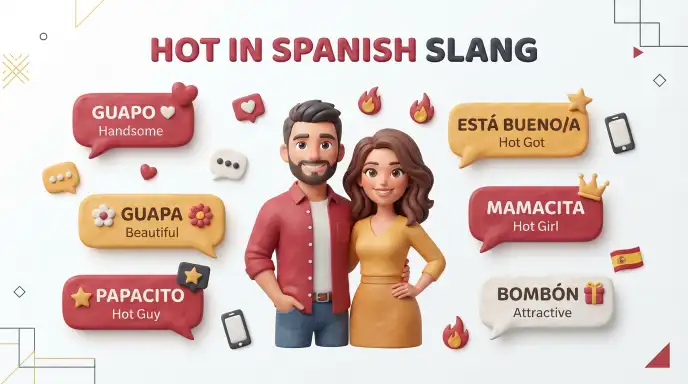
Hot in Spanish slang usually means someone who is very attractive, sexy, or good-looking, but the exact word changes depending on the country and situation.
Common slang expressions include está bueno/a, guapo/a, papacito, and mamacita. Some words are friendly compliments, while others are flirtier and should be used carefully.
Many people search for hot in Spanish slang after hearing it in songs, movies, social media videos, or conversations with Spanish speakers. Because Spanish slang varies across countries, the same expression may sound natural in Mexico but less common in Spain or Argentina.
In this guide, you’ll learn the meaning of hot in Spanish slang, the most popular expressions, where they are used, if they are rude, and how to use them correctly with real-life examples.
Quick Answer: Hot in Spanish Slang
Hot in Spanish slang refers to someone who is physically attractive or sexy. The most common expressions are está bueno/a, guapo/a, papacito, and mamacita, although the best choice depends on the country, the relationship between the speakers, and the level of formality.
| Spanish Slang | Meaning |
| Guapo/a | Handsome / Beautiful |
| Está bueno/a | She is hot |
| Papacito | Hot guy |
| Mamacita | Hot woman |
Quick Table: Most Common Spanish Slang Words for Hot
| Slang | Pronunciation | Meaning | Tone | Common Countries |
| Guapo/a | GWAH-poh / GWAH-pah | Attractive | Friendly | Spain, Mexico |
| Está bueno/a | eh-STAH BWEH-noh/nah | Hot | Informal | Latin America |
| Papacito | pah-pah-SEE-toh | Hot guy | Flirty | Mexico, Colombia |
| Mamacita | mah-mah-SEE-tah | Hot woman | Flirty | Mexico, U.S. Latino |
What Does Hot in Spanish Slang Mean?
The meaning of hot in Spanish slang depends on the conversation. Most often, it describes someone who looks very attractive, but it can also express admiration or flirtation.
Unlike English, Spanish has many different words for “hot.” Some describe physical appearance, while others refer to temperature. Understanding the context helps you choose the right expression.
Someone Is Attractive
This is the most common slang meaning.
Examples:
- Ese chico está bueno.
That guy is hot. - Ella está guapísima.
She looks gorgeous. - Es un papacito.
He’s really attractive.
These expressions are common in everyday conversations, social media comments, and dating situations.
Someone Is Very Good-Looking
Sometimes speakers use stronger adjectives to emphasize attraction.
For example:
- Está buenísimo.
He’s extremely hot. - Está buenísima.
She’s incredibly attractive.
These phrases are more expressive and are usually used among friends or romantic partners.
Hot Can Also Mean Temperature
Not every use of “hot” is slang.
Examples:
- Tengo calor.
I’m hot. - Hace mucho calor.
It’s very hot outside.
These are standard Spanish expressions and are unrelated to attractiveness.
Full Form or Complete Meaning
The phrase hot in Spanish slang does not have a full form because it is not an abbreviation. Instead, it represents several informal Spanish words that describe someone as attractive or sexy.
Depending on the country, people may use different expressions, including:
- Está bueno/a
- Guapo/a
- Papacito
- Mamacita
- Bombón
- Rico/a (in some regions)
Each expression carries a slightly different tone. Some are playful, while others are openly flirtatious.
Different Meanings of Hot in Spanish Slang
Spanish slang is highly regional. The same word may have different meanings depending on where it is used.
Meaning 1: Attractive or Sexy
This is by far the most common meaning.
People use it when talking about:
- A handsome actor
- A beautiful singer
- A crush
- Someone they are flirting with
Example:
“Ese cantante está buenísimo.”
Meaning:
“That singer is really hot.”
Meaning 2: Cute and Charming
Not every compliment is strongly romantic.
Words like guapo, guapa, bonito, and lindo often mean someone is attractive without sounding overly sexual.
Example:
“Te ves muy guapa hoy.”
Meaning:
“You look very pretty today.”
These expressions are much safer in everyday conversations.
Meaning 3: Stylish or Attractive Overall
Sometimes people use these words to compliment someone’s overall appearance rather than their physical features.
For example:
- Nice clothes
- Good hairstyle
- Fashion sense
- Confidence
Someone might say:
“Se ve muy bien.”
Meaning:
“They look really good.”
This compliment is more general and polite than calling someone “hot.”
Where Is Hot in Spanish Slang Commonly Used?
You’ll hear hot in Spanish slang in many informal situations, especially where people interact casually.
| Platform or Place | How It’s Used |
| TikTok | Complimenting creators |
| Comments on photos and reels | |
| Snapchat | Casual flirting |
| Friendly chats | |
| Dating Apps | Showing attraction |
| Movies & TV | Informal conversations |
| Music Lyrics | Romantic or flirty expressions |
On Social Media
Spanish speakers often comment things like:
- “Qué guapo.”
- “Está buenísima.”
- “Eres un papacito.”
These comments are common on Instagram, TikTok, and Facebook.
In Text Messages
Friends or partners may send messages such as:
- “Hoy te ves guapísima “
or
- “Siempre te ves muy bien.”
These expressions sound natural and friendly.
In Daily Conversation
People also use these compliments when meeting friends or talking about celebrities.
Example:
A: ¿Viste la nueva película?
B: Sí, el actor principal está muy bueno.
The second speaker is saying the actor is very attractive, not that he is physically warm.
Is Hot in Spanish Slang Rude, Offensive, or Harmless?
Most expressions used for hot in Spanish slang are harmless when used respectfully. However, some phrases sound more flirtatious than others, and the relationship between the speakers matters.
For example, calling your partner guapo or guapa is perfectly normal. Saying mamacita or papacito to a stranger, however, may come across as overly forward or even disrespectful in some cultures.
| Expression | Tone | Safe to Use? |
| Guapo / Guapa | Friendly | ✅ Yes |
| Bonito / Bonita | Polite | ✅ Yes |
| Lindo / Linda | Sweet | ✅ Yes |
| Está bueno/a | Informal | ✅ With friends |
| Papacito | Flirty | ⚠️ Use carefully |
| Mamacita | Very flirty | ⚠️ Context matters |
| Buenote/a | Strong slang | ⚠️ Casual only |
Is It Appropriate at Work?
Generally, no. Even though some expressions are common in daily life, compliments about someone’s appearance can feel unprofessional in the workplace.
If you want to compliment someone politely, use phrases like:
- Te ves muy bien. (You look great.)
- Qué elegante. (How elegant.)
Avoid flirtatious slang in business meetings, classrooms, or formal settings.
Real-Life Examples of Hot in Spanish Slang
Seeing the slang in context makes it much easier to understand.
Friendly Conversation
Carlos: ¿Viste a la nueva cantante?
Luis: Sí, está muy guapa.
Meaning:
“Did you see the new singer?”
“Yes, she’s very pretty.”
Text Message
Ana: ¡Te ves guapísimo en esa foto!
Meaning:
“You look really handsome in that picture!”
Instagram Comment
Qué guapa te ves.
Meaning:
“You look gorgeous.”
Talking About a Celebrity
Ese actor está buenísimo.
Meaning:
“That actor is really hot.”
Flirting
Eres un papacito.
Meaning:
“You’re really attractive.”
This expression is playful but should only be used with someone you know well.
Origin and History of Hot in Spanish Slang
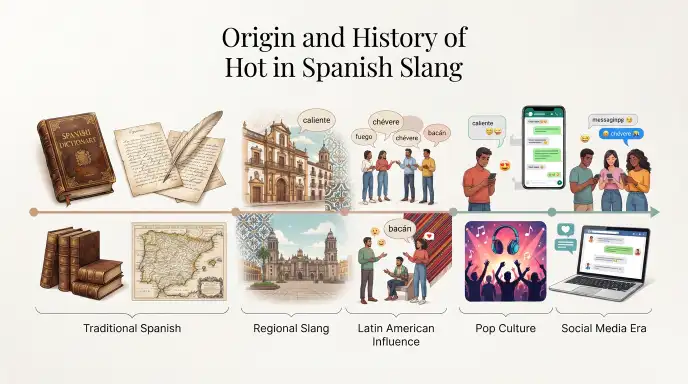
The idea of calling someone “hot” exists in many languages, but Spanish developed its own expressions long before modern social media.
Traditional Spanish Compliments
Words like guapo and guapa have been part of Spanish for centuries. Originally, they described someone who looked handsome, beautiful, or elegant.
These words remain some of the safest and most widely used compliments today.
Regional Slang Developed Over Time
As Spanish spread across Latin America, different countries created their own slang expressions.
For example:
- Mamacita became especially popular in Mexico and among Latino communities in the United States.
- Papacito is common in Mexico, Colombia, and several other Latin American countries.
- Bombón is often heard in Spain and Argentina.
These expressions became even more popular through television, music, and movies.
Social Media Increased Their Popularity
Platforms such as:
- TikTok
- YouTube
have helped regional slang spread far beyond its country of origin.
Today, many learners discover these expressions through viral videos, memes, and music rather than traditional Spanish classes.
Similar Slang or Related Terms
If you want to compliment someone’s appearance, there are many alternatives besides saying they’re “hot.”
| Spanish Word | Meaning | Tone |
| Guapo/a | Handsome / Pretty | Friendly |
| Bonito/a | Pretty | Polite |
| Lindo/a | Cute | Sweet |
| Hermoso/a | Beautiful | Warm |
| Rico/a* | Attractive (regional) | Informal |
| Bombón | Attractive person | Cute |
| Bello/a | Beautiful | Formal |
Note: Rico/a can also mean “delicious.” In some regions, it can describe an attractive person, so always pay attention to the context.
Why Do People Use Hot in Spanish Slang?
People use these expressions because they are natural, expressive, and often more personal than formal compliments.
Common reasons include:
- Complimenting someone’s appearance
- Flirting with someone they like
- Talking about celebrities
- Reacting to photos on social media
- Showing admiration
- Making conversations feel more relaxed
Many younger Spanish speakers also use these expressions in memes, videos, and online comments because they sound more casual than formal Spanish.
Common Misunderstandings
Learning hot in Spanish slang can be confusing because many beginners translate English directly into Spanish.
“Caliente” Is Not the Best Translation
One of the biggest mistakes is assuming caliente means “attractive.”
Usually:
- Caliente = physically hot
- Está bueno/a = attractive
- Guapo/a = handsome or beautiful
Depending on the situation, caliente can also have a sexual meaning, which may cause embarrassment if used incorrectly.
Every Country Uses Different Slang
Not every Spanish-speaking country uses the same expressions.
For example:
- Mexico may use mamacita more often.
- Spain commonly uses guapo.
- Argentina often prefers bombón.
This regional difference is one reason Spanish slang can be confusing for learners.
Not Every Compliment Means Someone Is Sexy
Words like:
- Bonito
- Lindo
- Bello
often describe someone as nice-looking without implying romantic or sexual attraction.
Understanding these differences helps you choose the right compliment for the situation.
Frequently Asked Questions
Q1. What does hot in Spanish slang mean?
Hot in Spanish slang usually means someone is very attractive, handsome, beautiful, or sexy. Common expressions include guapo/a, está bueno/a, papacito, and mamacita, depending on the country and the situation.
Q2. What is the most common way to say someone is hot in Spanish?
The most common expressions are:
- Guapo/Guapa – Handsome or beautiful
- Está bueno/a – a hot girl
- Buenísimo/a – Very attractive
These are widely understood across many Spanish-speaking regions, although local preferences vary.
Q3. Does “caliente” mean someone is hot or attractive?
Usually, no. Caliente primarily means physically hot or hot in temperature.
In some situations, it can also suggest sexual arousal, so it is not the best word to use when simply complimenting someone’s appearance.
Q4. Is “mamacita” offensive?
Not always. Mamacita is generally used as a flirtatious compliment, but some people may find it too personal or disrespectful, especially if it comes from someone they do not know.
It is best used only when the relationship and setting make it appropriate.
Q5. Can I say “guapo” to a friend?
Yes. Guapo and guapa are friendly compliments and are commonly used among friends, family members, and romantic partners. They are considered much more neutral than stronger slang terms.
Q6. Which Spanish slang word is safest to use?
If you’re unsure, guapo/a, bonito/a, or lindo/a are the safest choices. They sound friendly, respectful, and work well in most informal conversations.
Q7. Is hot in Spanish slang used on social media?
Yes. You’ll often see these expressions on platforms like TikTok, Instagram, Facebook, Snapchat, and WhatsApp, especially in comments, captions, and casual chats.
Q8. Can I use these slang words at work?
It’s better to avoid flirtatious slang in professional settings. If you want to compliment a coworker politely, use expressions like:
- Te ves muy bien. (You look great.)
- Qué elegante. (How elegant.)
These are respectful and more appropriate for the workplace.
Conclusion
Hot in Spanish slang most commonly describes someone who is attractive, handsome, beautiful, or sexy. Popular expressions like guapo/a, está bueno/a, papacito, and mamacita are widely used in conversations, social media, music, and everyday life.
However, the exact meaning and tone can vary depending on the country and the relationship between the speakers.When learning Spanish slang, remember that context is everything. Some words are friendly compliments, while others are more flirtatious and should be used with care.
If you’re ever unsure, choose polite expressions such as guapo/a, bonito/a, or lindo/a. They sound natural, respectful, and are understood throughout much of the Spanish-speaking world.
By understanding how these expressions are used in real conversations, you’ll be able to recognize them in movies, songs, social media posts, and everyday interactions with greater confidence.
Explore More Articles:

Hi, I’m Tyler Brooks, a writer specializing in Gen Z culture and internet slang. I track trending terms across TikTok and social media to explain their real-world meanings. My goal is to provide clear, accurate, and up-to-date definitions that help readers understand modern online language.