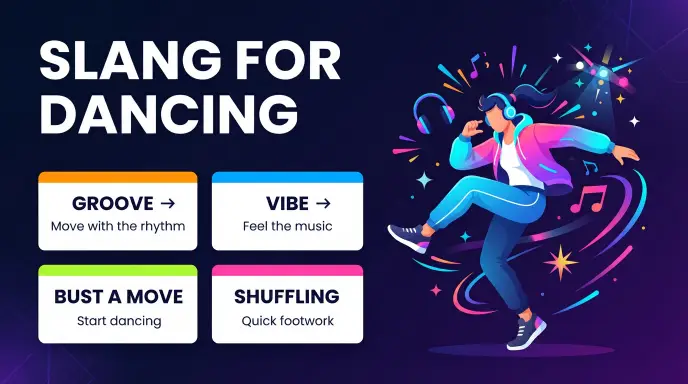
Slang for dancing refers to informal words and phrases people use to describe dancing in a fun, creative, or energetic way instead of simply saying “dance.”
Popular expressions like boogie, bust a move, groove, get down, and cut a rug are common examples used in everyday conversations, music, and social media.
Many people search for slang for dancing after hearing these expressions in songs, movies, TikTok videos, or text messages. While they all relate to dancing, each phrase has its own tone, style, and cultural background.
Some are classic expressions that have been around for decades, while others remain popular because of modern music and online trends. Understanding these informal terms helps you follow conversations more easily and use them naturally in the right context.
Quick Answer
Slang for dancing refers to informal expressions such as boogie, bust a move, groove, get down, cut a rug, and hit the dance floor. These phrases all mean to dance, but they are used in different situations and styles.
What Does Slang for Dancing Mean in Text?
When someone uses slang for dancing in a text message, they simply mean dancing in a fun, informal, or expressive way. Instead of saying “Let’s dance,” people may say “Let’s bust a move” or “Let’s hit the dance floor.”
These phrases make conversations sound more natural and energetic. They are especially common when people are talking about parties, celebrations, concerts, or music.
For example:
- “The DJ is amazing! let’s bust a move!”
- “Everyone was grooving to the music.”
- “We boogied until midnight.”
Unlike formal language, dance slang often reflects emotion, excitement, and personality.
Does Slang for Dancing Have a Full Form?
No. Slang for dancing does not have a full form because it is not an abbreviation or acronym.
Instead, it is a collection of informal expressions that describe dancing in different ways. Each slang term has its own meaning and background.
Some examples include:
| Slang | Meaning |
| Boogie | Dance happily |
| Bust a move | Dance with confidence |
| Groove | Dance smoothly with the rhythm |
| Get down | Dance with excitement |
| Cut a rug | Dance enthusiastically |
| Hit the dance floor | Start dancing |
Is Slang for Dancing Rude, Offensive, or Neutral?
Most slang for dancing is completely neutral. These expressions are positive and are commonly used during fun occasions.
People use them when talking about:
- Weddings
- Birthday parties
- Concerts
- Festivals
- School dances
- Family celebrations
None of the common dance slang terms are considered offensive by themselves.
However, the way you use them still matters. A friendly invitation like “Let’s get down!” sounds cheerful, while using slang in a formal business meeting would feel out of place.
Where Is Slang for Dancing Commonly Used?
Dance slang is popular anywhere people enjoy music and entertainment.
Social Media
Platforms like TikTok and Instagram have helped many dance expressions become popular worldwide. Dance challenges and trending songs often introduce new slang.
Text Messages
Friends commonly use dance slang in chats.
Example:
“Party starts at 8. Be ready to bust a move.”
Music
Many songs include dance slang because it sounds energetic and memorable.
Movies and Television
Characters often use informal expressions like “boogie” or “get down” during party scenes.
Everyday Conversation
People naturally use dance slang while talking with friends or family.
Example:
“Everyone got down after dinner.”
Gen Z Slang for Dancing and Modern Dance Expressions
Modern social media has influenced the way people talk about dancing. Dancing slang can appear in captions, comments, videos, memes, and messages, especially when people share dance challenges or trending music.
Gen Z slang for dancing is often connected with TikTok, Instagram, viral videos, and online music culture. These expressions can change quickly as new trends become popular.
If you are searching for slang words for dance, expressions such as groove, bust a move, and get down are still useful examples. Other slang terms for dancing may become popular through music, dance challenges, or online communities.
The phrase slang words for dancing can describe informal expressions used to talk about dancing, dance movements, or someone’s style. In the same way, dance slang words may appear in casual comments such as, “Those moves are fire!”
The meaning of slang dance expressions usually depends on the context. A phrase used in a dance video may have a different meaning from one used in everyday conversation.
Popular Slang Words for Dancing
Bust a Move
This phrase means to dance confidently and with lots of energy.
Example:
“The music started, so everyone busted a move.”
Boogie
One of the oldest and most recognizable dance slang terms.
It simply means to dance happily.
Example:
“Let’s boogie all night.”
Groove
Groove means dancing smoothly while enjoying the rhythm.
Example:
“She was grooving to every song.”
Get Down
This phrase means dancing with enthusiasm.
Example:
“Come on; let’s get down!”
Cut a Rug
An older American slang expression that means dancing energetically.
It became popular during the swing and jazz era.
Example:
“Grandpa can still cut a rug.”
Hit the Dance Floor
A common expression that means to begin dancing.
Example:
“Everyone hit the dance floor when the DJ arrived.”
Throw Shapes
Mostly used in British English.
It means dancing at clubs or parties.
Example:
“We threw shapes until midnight.”
Slang for Dance Moves and Dance Styles
When people talk about dancing informally, they may use different expressions to describe a movement, style, or way of dancing. Slang for dance moves can make conversations about music and dancing sound more fun and expressive.
The dance meaning slang can change depending on the expression and context. For example, dance slang meaning may describe moving with the rhythm, dancing with energy, or showing a particular style.
Common dance slang terms include bust a move, groove, get down, and throw shapes. These dance slang words are mostly used in casual conversations, music, parties, and social media.
If you are looking for a slang word for dance, there is no single answer. Words such as boogie and groove can be used depending on the tone and type of dancing. This is why dance slang can have slightly different meanings in different situations.
Real-Life Examples of Slang for Dancing
Friendly
“Come on, let’s bust a move!”
Casual
“We were just grooving in the kitchen.”
Celebration
“Everyone got down at the wedding.”
Concert
“The whole crowd was boogieing together.”
Family Gathering
“Even Grandpa hit the dance floor.”
Social Media
“Weekend mood: just here to groove.”
Origin and Background of Slang for Dancing
Dance slang has changed over time as music styles evolved.
Early Dance Slang
Expressions like cut a rug became popular during the jazz and swing era in the early twentieth century. At that time, dancing was a major form of entertainment.
Disco Era
During the 1970s, disco music introduced popular phrases like boogie and get down.
These expressions appeared in hit songs and quickly became part of everyday language.
Hip-Hop Culture
The phrase bust a move became famous during the 1980s through hip-hop music and dance culture.
It remains one of the most popular dance slang expressions today.
Modern Social Media
Today, TikTok and Instagram continue to introduce new dance-related phrases through viral challenges and trending videos. While some disappear quickly, classic expressions like boogie and groove remain popular.
Comparison with Similar Slang
| Slang | Meaning | Tone | Common Use |
| Bust a move | Dance energetically | Fun | Everyday conversation |
| Boogie | Dance happily | Casual | Music and parties |
| Groove | Dance smoothly | Relaxed | Social conversations |
| Get down | Dance with excitement | Energetic | Parties |
| Cut a rug | Dance enthusiastically | Vintage | Informal speech |
| Throw shapes | Dance | British slang | Clubs |
| Hit the dance floor | Start dancing | Neutral | Universal |
Why People Use This Slang
People enjoy dance slang because it makes conversations sound more lively and expressive.
Common reasons include:
- It sounds fun.
- It adds personality.
- It matches music culture.
- It creates excitement.
- It feels more natural than formal language.
- It is popular on social media.
Instead of saying:
“Let’s dance.”
People often say:
“Let’s bust a move.”
The second version feels much more energetic.
Slang for Dancers and Ways to Describe Good Dancing
Slang can also describe a person who dances or someone who is especially good at dancing. The dancer meaning slang depends on the expression, context, and dance culture involved.
There is no single slang for dancer that works in every situation. People may use casual expressions to praise someone’s moves, energy, rhythm, or overall performance. Dancer slang can also differ between dance communities and styles.
If you are looking for slang for dancing well, people may use phrases such as killing it, crushing the moves, or bringing the energy to praise someone’s dancing. A simple phrase for dancing can also describe how naturally or confidently someone moves to music.
Street dance slang can be more specific because different street-dance communities may have their own expressions for movements, styles, and performances. Terms connected with hip-hop, freestyle, breaking, and other dance styles may not be understood by everyone.
Overall, slang for dance can refer to the act of dancing, a particular movement, a dancer’s ability, or a specific dance style. The best expression depends on the situation and the audience.
Impact of Using Slang in Communication
Using dance slang can make conversations feel:
- Friendly
- Relaxed
- Fun
- Modern
- Expressive
However, not everyone understands slang equally well. Older expressions may confuse younger people, while newer slang may not be familiar to older generations.
It is always best to consider your audience before using informal language.
Is It Safe for Social Media?
Yes.
Most slang for dancing is perfectly safe to use on:
- TikTok
- Snapchat
- X
- Discord
- YouTube
- Text messages
These expressions are generally family-friendly and widely accepted.
They are commonly used in captions, comments, dance videos, and conversations about music.
When to Avoid Using It
Although dance slang is harmless, there are situations where formal language is more appropriate.
Avoid using dance slang in:
- Academic essays
- Business reports
- Legal documents
- Professional emails
- Official presentations
Instead of writing:
“Our team busted a move.”
You could write:
“Our team performed exceptionally well.”
Using the right language for the situation helps your message sound professional.
Polite Alternatives
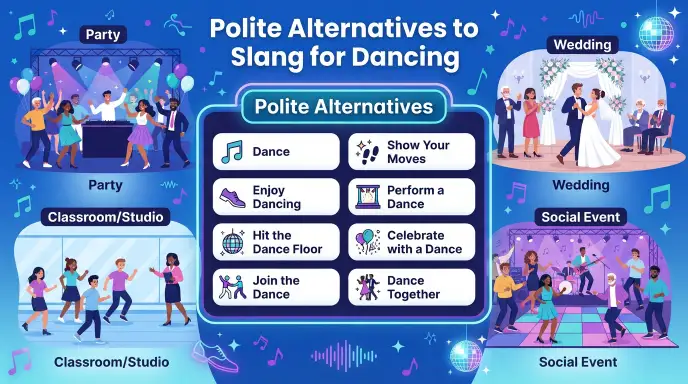
If you want more formal expressions, you can say:
- Dance
- Perform
- Move to the music
- Join the dance
- Dance together
- Perform choreography
- Enjoy the music
These alternatives work well in formal writing and professional settings.
Examples in Different Contexts
Friendly Conversation
Alex: Ready for the party?
Jamie: Absolutely! I’m ready to bust a move.
Casual Conversation
Emma: I love this song.
Ryan: Me too. Let’s hit the dance floor.
Argumentative Tone
“Stop standing around and get down already!”
Gaming or Social Media Context
“My character started grooving after winning the match.”
Key Takeaways
- Slang for dancing refers to informal words and phrases people use instead of simply saying “dance.”
- Popular expressions include boogie, bust a move, groove, get down, cut a rug, and hit the dance floor.
- Most dance slang is friendly, casual, and non-offensive, making it suitable for everyday conversations.
- These expressions are commonly heard in music, movies, parties, texting, and social media.
- Some dance slang, like cut a rug, has been around for decades, while others remain popular through modern culture.
- Different phrases can express different styles of dancing, from smooth movements to energetic performances.
- Dance slang is best used in informal settings and is generally not appropriate for professional or academic writing.
- Understanding these expressions helps you communicate more naturally and better understand English conversations and pop culture.
Frequently Asked Questions
Q1. What is the most common slang word for dancing?
Words like boogie, groove, bust a move, and get down are some of the most popular informal ways to say someone is dancing.
Q2. Is “bust a move” still used today?
Yes. It remains a popular expression in casual conversations, music, and social media, especially when encouraging someone to dance confidently.
Q3. What does “cut a rug” mean?
“Cut a rug” is an older American expression that means to dance with enthusiasm, especially at parties or celebrations.
Q4. Are dance-related slang terms appropriate for all ages?
Most common dance slang is family-friendly and suitable for everyday conversations. However, newer internet slang may not always be understood by every age group.
Q5. Which dance slang is most popular on social media?
Expressions like groove, get down, and hit the dance floor are frequently used in captions, dance videos, and short-form content on platforms like TikTok and Instagram.
Q6. Can these expressions be used in professional writing?
No. They are best suited for informal conversations, text messages, and social media. Formal writing should use standard words like dance or perform.
Q7. Do these expressions mean the same thing?
They all relate to dancing, but each has a slightly different tone. Some sound energetic, while others describe smooth or relaxed movement.
Q8. Why do people use informal words instead of saying “dance”?
People often use slang because it sounds more natural, expressive, and fun. It also reflects different music styles and cultural trends.
Q9. Are these expressions used around the world?
Many are widely recognized in English-speaking countries, although some are more common in certain regions, such as throw shapes in the UK.
Q10. How can I know which expression fits the situation?
Consider your audience and the setting. Modern phrases work well in casual conversations and online posts, while classic expressions may add a playful or nostalgic touch.
Conclusion
Slang for dancing includes many fun and expressive phrases that make conversations more lively. If you say boogie, bust a move, groove, get down, or hit the dance floor, each expression adds personality and excitement to the way you talk about dancing.
Most dance slang is friendly, neutral, and widely understood in everyday conversations, music, texting, and social media.
By understanding the meaning, history, and context of these expressions, you can use them naturally and confidently while choosing the right phrase for every situation.
Read More Articles:

Hi, I’m Rachel Simmons, a language writer specializing in American English and modern slang. I research regional expressions, everyday phrases, and evolving word meanings across the United States. I enjoy making complex language trends simple, practical, and easy for everyone to understand.