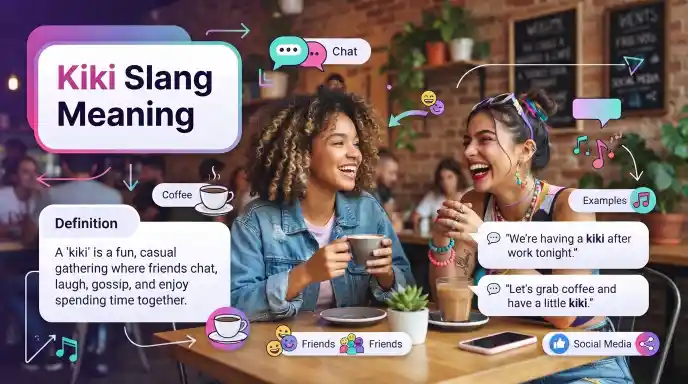
Kiki slang refers to a fun, relaxed, and often humorous social gathering where friends chat, laugh, share gossip, or spend time together.
The word is especially popular in LGBTQ+ culture and later became widely known through social media, music, and online conversations.
Kiki slang is a popular internet expression that describes spending enjoyable time with friends, usually while talking, laughing, or sharing stories.
If you’ve seen someone say, “Let’s have a kiki,” they are inviting others to hang out in a lighthearted and friendly way.
Many people search for kiki slang after seeing it on TikTok, Instagram, X (formerly Twitter), Reddit, or in song lyrics. While the word is now used by many people online, it has deeper cultural roots that are important to understand.
In this guide, you’ll learn what kiki slang means, where it came from, when to use it, and how it differs from similar internet slang.
Quick Answer
Kiki slang means a casual, fun gathering where people chat, laugh, gossip, or enjoy each other’s company. The term became popular through LGBTQ+ communities before spreading into mainstream internet culture and social media. It is generally positive, playful, and harmless.
| Term | Meaning | Tone | Common Use |
| Kiki | A fun hangout or friendly chat | Playful | Social media, texting, conversations |
| Have a kiki | Spend time talking, laughing, or gossiping with friends | Casual | Friends, parties, group chats |
What Does Kiki Slang Mean?
Kiki slang describes a relaxed social moment where friends come together to laugh, chat, gossip, or simply enjoy each other’s company. It is more about the fun atmosphere than the location itself.
A kiki can happen almost anywhere, such as:
- At someone’s house
- During a coffee meetup
- In a group video call
- At a party
- In an online group chat
- While catching up after a long time
Unlike a formal gathering, a kiki is casual and full of friendly conversation.
The Simple Meaning
At its simplest, kiki slang means:
Friends getting together to laugh, gossip, relax, and enjoy each other’s company.
People often use it when they want to describe a fun and informal social experience.
What Does “Let’s Have a Kiki” Mean?
When someone says:
“Let’s have a kiki.”
They usually mean:
- Let’s hang out.
- Let’s catch up.
- Let’s chat.
- Let’s gossip.
- Let’s have some fun together.
It is an invitation to spend enjoyable time with friends rather than doing anything formal.
The Tone of Kiki
The word almost always has a positive tone.
It often suggests:
- Fun
- Friendship
- Humor
- Relaxation
- Entertainment
- Light gossip
It does not normally describe arguments or serious meetings.
Full Form of Kiki Slang
Kiki does not have a full form. It is not an abbreviation or acronym.
Unlike slang such as:
- LOL
- BRB
- ATP
- WFH
Kiki is simply a standalone slang word.
Some people mistakenly think each letter stands for separate words, but that is incorrect.
Instead, kiki developed as a word within LGBTQ+ social culture and later became popular through music, television, drag culture, and social media.
Today, many people use it without knowing its original cultural background.
Is Kiki an Acronym?
No.
| Question | Answer |
| Is Kiki an abbreviation? | No |
| Does Kiki have a full form? | No |
| Is it internet slang? | Yes |
| Is it commonly used in texting? | Yes |
| Is it used on social media? | Yes |
Knowing that kiki is a standalone slang term helps avoid one of the most common misunderstandings about the word.
Different Meanings of Kiki Slang
Kiki slang has one main meaning, but the way people use it can change depending on the conversation. Understanding the context helps you know what the speaker means.
A Fun Social Gathering
This is the most common meaning.
A kiki is a relaxed get-together where friends talk, laugh, tell stories, and sometimes share a little gossip.
Example:
“We’re having a kiki after class. Want to join us?”
A Friendly Chat or Gossip Session
Sometimes kiki refers to the conversation itself rather than the gathering.
People may use it when they spend time catching up with friends.
Example:
“We had a long kiki about everything that happened this week.”
A Celebration or Party Atmosphere
In some situations, especially online, kiki can also describe a lively party or a fun event where everyone is enjoying themselves.
Example:
“Last night’s birthday dinner turned into a real kiki.”
| Meaning | Context | Tone |
| Friendly hangout | Meeting friends | Casual and positive |
| Chat or gossip | Texting or conversation | Relaxed |
| Fun celebration | Parties and events | Cheerful |
Where Is Kiki Slang Commonly Used?
Kiki slang is mostly used in casual conversations, online communities, and social media. It is uncommon in formal writing or professional communication.
Text Messages
Friends often use kiki when making plans.
Example:
- “Let’s have a kiki this weekend.”
- “Our lunch turned into a two-hour kiki.”
TikTok
On TikTok, creators may use the word while sharing funny stories, friend groups, or entertaining moments.
Example:
“Come join our Friday night kiki!”
Instagram captions sometimes use kiki to describe fun photos with friends.
Example:
“Nothing beats a weekend kiki with my favorite people.”
People may mention a kiki when talking about social events, pop culture, or funny experiences with friends.
Group Chats
Many friend groups use the word when planning a meetup.
Example:
“Who’s free for a kiki tonight?”
Is Kiki Slang Rude, Offensive, or Harmless?
Kiki slang is generally harmless. It usually carries a positive and friendly meaning.
However, understanding its cultural background is important. The word became well known through LGBTQ+ communities before becoming popular with a wider audience. Using it respectfully helps acknowledge where it came from.
| Situation | Appropriate? |
| Talking with friends | ✅ Yes |
| Social media posts | ✅ Yes |
| Casual texting | ✅ Yes |
| Family conversations | ✅ Usually |
| School presentations | ⚠️ Depends on the audience |
| Business emails | ❌ Not recommended |
Although the word itself is not offensive, some people may not recognize it. If you’re speaking with someone unfamiliar with internet slang, using a simpler phrase like “hang out” or “get together” may be clearer.
Why Do People Use Kiki Slang?
People use kiki slang because it feels fun, expressive, and more personal than saying “meet up.”
Common reasons include:
- It sounds playful.
- It describes a relaxed social vibe.
- It is popular in online culture.
- It creates a sense of friendship.
- It is shorter and more memorable than longer phrases.
Many people also use it simply because they have heard it in music, TV shows, drag culture, or on social media.
Real-Life Examples of Kiki Slang
Seeing the word in everyday conversations makes it much easier to understand.
Friends
Emma: “Want to grab coffee later?”
Mia: “Yes! We haven’t had a proper kiki in weeks.”
Text Message
Alex: “Movie tonight?”
Jordan: “Sure, then let’s stay for a little kiki afterward.”
TikTok Caption
“Just a late-night kiki with the best people “
Instagram Caption
“Weekend kiki, great food, and even better friends.”
College Friends
Sam: “How was your weekend?”
Chris: “Mostly just a kiki at my friend’s apartment.”
Family Gathering
Aunt: “What were you all doing in the kitchen?”
Niece: “Just having a little kiki and catching up.”
Origin and History of Kiki Slang
Kiki did not begin as general internet slang. It has deeper cultural roots.
Early Cultural Background
The word became popular within LGBTQ+ communities, especially among drag performers and ballroom culture, where it described relaxed social time with friends. Over the years, its meaning expanded while keeping the idea of friendship and fun.
Its exact earliest origin is difficult to confirm, but language experts generally agree that the term was used within LGBTQ+ communities before becoming mainstream. Rather than having a single inventor, it spread naturally through community use.
Growing Popularity
The word reached a much wider audience through:
- Drag culture
- Music
- Television
- Social media
- Online communities
As more people heard the term, it became part of everyday internet vocabulary.
Is Kiki Still Popular?
Yes, but its popularity depends on the community.
Some younger users regularly use kiki, while others prefer newer slang. It is still recognized across many online spaces, especially among people interested in pop culture and LGBTQ+ media, though it is less common than some newer internet expressions.
| Time Period | Popularity |
| Early LGBTQ+ community use | Growing within the community |
| Mainstream media exposure | Rapid growth |
| Social media era | Widely recognized |
| Today | Still used, but more niche than some newer slang terms |
Similar Slang or Related Terms
Kiki slang is not the only word people use for a fun social gathering. Here are some related slang terms and phrases that have similar meanings, although each has its own tone.
| Slang | Meaning | Similar to Kiki? |
| Hang out | Spend time together casually | ✅ Yes |
| Catch up | Talk after not seeing someone for a while | ✅ Yes |
| Chill | Relax with friends | ✅ Yes |
| Vibe | Enjoy a pleasant atmosphere | ✅ Partly |
| Tea | Gossip or interesting news | ✅ Often used during a kiki |
| Link up | Meet someone in person | ✅ Yes |
| Squad time | Spend time with your friend group | ✅ Similar |
Kiki vs. Hang Out
Both expressions describe spending time with friends, but kiki usually suggests more conversation, laughter, and gossip than simply hanging out.
Kiki vs. Tea
People often confuse these two terms.
- A kiki is the gathering.
- The tea is the gossip or interesting news shared during that gathering.
Example:
“Let’s have a kiki so you can spill the tea.”
When Should You Avoid Using Kiki?
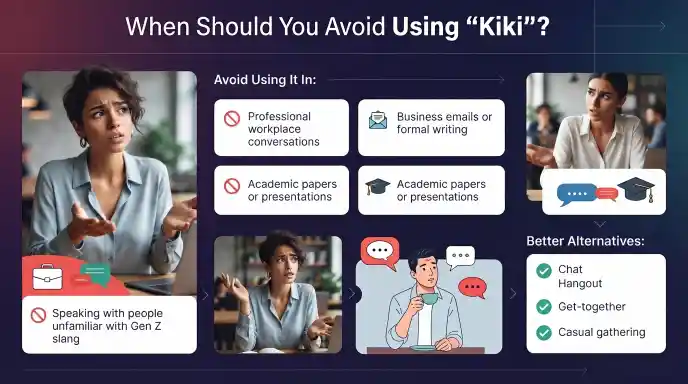
Kiki slang works best in casual conversations. There are situations where using it may confuse people or sound too informal.
Avoid using kiki when:
- Writing business emails
- Giving formal presentations
- Talking to people unfamiliar with internet slang
- Writing academic assignments
- Speaking in professional interviews
- Communicating with clients or customers
Instead, use clearer phrases such as:
- Let’s meet.
- Let’s get together.
- Let’s catch up.
- Let’s have a chat.
- Let’s spend some time together.
Choosing the right words for your audience helps avoid misunderstandings.
Common Misunderstandings About Kiki Slang
Many people misunderstand kiki slang because they first see it online without any explanation.
It Is Not an Acronym
Some users think each letter stands for separate words.
This is incorrect.
Kiki is a standalone slang word.
It Does Not Always Mean a Party
Although a kiki can happen at a party, it often describes a simple conversation between friends.
A coffee meetup can be a kiki just as easily as a birthday celebration.
It Did Not Start on TikTok
TikTok helped introduce the word to more people, but kiki existed long before TikTok became popular.
Its roots are in LGBTQ+ communities, where it was already being used socially.
It Is Not Always About Gossip
Some people believe a kiki only involves gossip.
In reality, it can simply mean spending enjoyable time together, if people are chatting, laughing, or catching up.
Frequently Asked Questions
Q1. What does kiki slang mean?
Kiki slang means a fun, casual gathering where friends talk, laugh, catch up, or share stories. It is commonly used in texting and social media.
Q2. Is kiki slang offensive?
No. Kiki is generally considered friendly and harmless. However, because it has roots in LGBTQ+ culture, it is best to use it respectfully and understand its background.
Q3. Does kiki have a full form?
No. Kiki is not an abbreviation or acronym. It is simply a slang word.
Q4. Where is kiki slang commonly used?
People use kiki on:
- TikTok
- Group chats
- Text messages
- Casual conversations
Q5. Can I use kiki at work?
Usually, no.
Although the word is not rude, it sounds informal. In professional settings, phrases like “Let’s meet” or “Let’s catch up” are usually more appropriate.
Q6. Is kiki still popular?
Yes. Kiki is still recognized by many people, especially in online communities, pop culture discussions, and LGBTQ+ spaces. While some newer slang terms have become more common, kiki remains widely understood.
Q7. What is the difference between a kiki and a party?
A kiki focuses on conversation, laughter, and spending time together. A party is often larger and may include music, dancing, or planned entertainment. A small party can become a kiki if friends mainly gather to chat and enjoy each other’s company.
Q8. Who commonly uses kiki slang?
The term is used by people of many ages, but it is especially common among social media users, pop culture fans, LGBTQ+ communities, and friends chatting in informal settings.
Q9. What does Kiki mean in Gen Z?
Kiki in Gen Z slang means a fun and casual hangout where friends chat, laugh, and share stories or gossip. It describes a relaxed social moment.
Q10. What is a Kiki girl?
A Kiki girl usually refers to a fun-loving, social person who enjoys chatting, laughing, and spending time with friends. It is a playful and positive expression.
Conclusion
Kiki slang refers to a fun, friendly get-together where people laugh, chat, catch up, and enjoy each other’s company.
Although the term is now common across social media and texting, it has important cultural roots in LGBTQ+ communities and became popular through drag culture, music, and online conversations.
Today, kiki slang remains a cheerful and harmless expression that fits casual conversations, group chats, and social media posts. Knowing its meaning, origin, and the best situations to use it will help you communicate naturally while respecting the culture that helped make the term popular.
If someone invites you to “have a kiki” or you see the phrase online, you’ll now understand that it’s all about sharing a fun and memorable time with friends.
Explore More Articles:

Hi, I’m Tyler Brooks, a writer specializing in Gen Z culture and internet slang. I track trending terms across TikTok and social media to explain their real-world meanings. My goal is to provide clear, accurate, and up-to-date definitions that help readers understand modern online language.