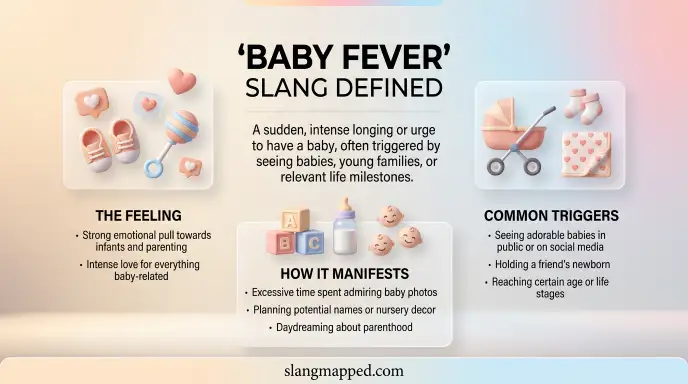
“Baby fever” is a slang term for a sudden, intense desire to have a baby, hold an infant, or start a family. It happens when seeing cute babies, small clothing, or family videos triggers a strong emotional or physical urge to become a parent.
You might hear a friend sigh after seeing a sleeping newborn and say, “Oh no, my baby fever is kicking in!” Or maybe you saw a viral TikTok video of a smiling infant wearing tiny socks and saw thousands of comments reading, “This gives me major baby fever.”
Understanding this expression helps you follow everyday conversations both online and in real life. While it contains the word fever, it is not a medical illness or a physical sickness. Instead, it describes a sudden wave of longing to hold, cuddle, or care for a baby.
People of many ages and backgrounds talk about this feeling, especially when their friends start families or when cute family videos pop up on social media.
This guide covers what the term means, why people experience it, how to spot it in conversation, and how to use it correctly in texts or comments.
Quick Answer Table
| Question | Answer |
| Primary Meaning | A strong emotional desire to have a baby or hold an infant |
| Tone | Casual, lighthearted, relatable, and personal |
| Commonly Used By | Young adults, couples, friends, and social media users |
| Main Platforms | TikTok, Instagram, Facebook, group chats |
| Is It Offensive? | No, it is completely harmless and socially acceptable |
Why People Experience Baby Fever
The physical or emotional urge to have a child often comes on suddenly. A person might feel completely neutral about parenthood one moment, but after holding a friend’s newborn or seeing tiny shoes in a store, a strong feeling of warmth and longing takes over.
Scientists and psychologists note that seeing baby-like features such as big eyes, chubby cheeks, and small hands naturally triggers caretaking instincts in human brains.
When you see something cute, your brain releases chemical signals that make you feel happy and protective.
Social media plays a major role in how often people mention this feeling today. Short videos highlighting happy infants, cute baby outfits, and heartwarming parenting moments make these feelings easy to share with friends.
When someone says they have baby fever, they are acknowledging that emotional reaction.
Where “Baby Fever” Is Used
People use this term frequently across popular social media apps, messaging platforms, and everyday discussions. Since the core meaning stays the same across every channel, this table breaks down how it appears in different spaces.
| Platform / Setting | How It Appears | Example |
| TikTok & Instagram Reels | Comments on videos showing cute infants, toddlers, or parenting moments | “This video is giving me severe baby fever 🥺” |
| Text & Group Chats | Messages sent to friends or partners after meeting a baby or seeing cute news | “I held my cousin’s new baby today and now I have total baby fever.” |
| In-Person Conversations | Spoken aloud when shopping for gifts or visiting family members | “Don’t let me hold the baby too long or my baby fever will act up!” |
| Online Communities (Reddit/Facebook) | Forum posts asking others if they feel ready for children or family planning | “Did anyone else’s baby fever get stronger in their late twenties?” |
Is Baby Fever the Same as Being Ready for a Child?
It is easy to confuse a sudden urge with real readiness, but the two concepts are quite different. Experiencing baby fever is an emotional reaction, while being ready to raise a child involves practical, financial, and physical planning.
| Aspect | Baby Fever | Real Readiness for Parenthood |
| Nature | Emotional, spontaneous reaction | Planned, logical, and practical decision |
| Triggers | Cute clothes, smiling infants, viral videos | Stable income, strong relationship, personal goals |
| Duration | Can pass quickly or come in brief waves | Long-term commitment and steady mindset |
| Focus | Cute, enjoyable moments of infancy | All stages of parenting, including hard times |
Real-Life Examples in Context
Example 1: Text Message Between Friends
- Context: Maya just visited her sister at the hospital.
- Maya: “Sam, little Leo is so tiny! He fell asleep right on my chest.”
- Sam: “Oh no, stay strong! You said last week you wanted to wait three years!”
- Maya: “I know, but this baby fever is real right now haha.”
Why it works: Maya uses the term casually to explain her sudden emotional reaction after holding a baby.
Example 2: Comment on a Social Media Post
- Context: Jordan is scrolling through video feeds and sees a toddler laughing while eating ice cream.
- Jordan (commenting): “My baby fever just spiked to 100 degrees watching this!”
Why it works: Jordan uses exaggeration (“100 degrees”) as a joke to express how cute the video is.
Example 3: Everyday Workplace Conversation
- Context: Marcus brings his new baby daughter to the office to meet his coworkers.
- Elena: “She is absolute perfection! Look at those tiny sock shoes.”
- David: “Don’t look too long, Elena, or you’ll get baby fever!”
Why it works: David uses the phrase to tease a coworker in a friendly, lighthearted way.
Common Emojis Paused with “Baby Fever”
When people type about this feeling in texts or social captions, they usually include specific emojis to convey emotion:
- 👶 Baby Emoji: Directly highlights the topic.
- 🥺 Pleading Face: Shows overwhelming sweetness or emotional vulnerability.
- 🍼 Baby Bottle: Adds a playful, cute touch to the message.
- 🧸 Teddy Bear: Represents warmth, comfort, and childhood.
- 💖 Sparkling Heart: Emphasizes deep affection and love.
Common Mistakes to Avoid
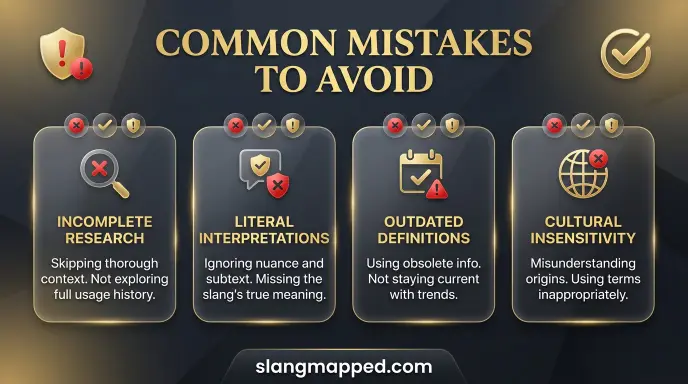
- Treating It Like an Illness: Never offer medicine or ask if someone needs a doctor when they say they have baby fever. It is an emotional figure of speech, not a physical temperature.
- Assuming It Means Immediate Pregnancy: Someone can express baby fever without actively trying to become pregnant. It often just means they find something extremely cute.
- Using It in Formal Settings: Avoid using slang phrases like this in professional reports, job interviews, or formal academic writing. Stick to terms like “parental desire” or “family planning” in serious contexts.
- Thinking Only Women Experience It: Anyone of any gender can experience a strong emotional desire for a child or feel touched by seeing cute babies.
Key Takeaways
- Meaning: “Baby fever” refers to a sudden, strong desire to have a baby or hold an infant.
- Context: It is informal, friendly slang used in daily speech, texts, and social media comments.
- Not Medical: It has nothing to do with body temperature or physical illness.
- Triggers: Commonly brought on by cute videos, tiny clothes, or holding someone else’s child.
- Universal: People of various ages and genders can experience or discuss it.
Frequently Asked Questions
Q1. Can guys get baby fever?
Yes, men can definitely experience baby fever. Many men feel a strong desire to become fathers or enjoy holding and caring for young children. Research and social polls show that emotional responses to cute infants happen across all genders.
Q2. Is baby fever positive or negative?
It is almost always used in a positive, lighthearted, or playful way. People use it to express warmth, affection, and happiness. The only time it feels slightly stressful is if someone wants a child badly but is not in a position to have one yet.
Q3. What is the opposite of baby fever?
While there is no single official slang word for the opposite, people online sometimes joke about having “birth control” moments. This happens when witnessing a screaming toddler in a store or dealing with a messy diaper makes someone feel glad they do not have children right now.
Q4. Is baby fever real or just a meme?
It is a very real emotional experience backed by psychology. Seeing baby-like traits naturally stimulates caring instincts in humans. Social media memes simply gave this natural biological and psychological response a popular nickname.
Q5. How long does baby fever last?
It varies from person to person. For some, it is a fleeting thought that vanishes ten minutes after scrolling past a cute video. For others, it comes in regular waves or marks the start of a serious desire to plan for a family.
Q6. At what age do people usually get baby fever?
It most commonly affects young adults in their twenties and thirties as friends start having families. However, younger people or older adults can also feel a sudden surge of affection when seeing infants.
Q7. Is “baby fever” rude to say to someone?
No, it is generally considered polite and friendly. However, avoid pushing the topic if someone has shared that they struggle with fertility or do not want children, as family topics can sometimes be sensitive.
Q8. How do you respond when a friend says they have baby fever?
You can respond with a laugh, send a cute emoji, or ask if they plan on starting a family soon. A simple reply like “They really are adorable!” or “Stay strong!” works well depending on the conversation.
Conclusion
“Baby fever” is a widely used slang term that simply describes a strong, sudden urge to have a child or be around babies.
Driven by natural instincts and boosted by cute social media content, it is a fun and relatable way to express affection for tiny infants.
\If you encounter it in a group chat, a TikTok comment section, or a casual conversation with friends, you now know exactly what it means and how to use it with confidence.
You May Also Like:
- 304s Slang: Meaning, Origin, and How It’s Used
- What Is Cheef Slang? Meaning, Usage, Examples & Context

Hi, I’m Tyler Brooks, a writer specializing in Gen Z culture and internet slang. I track trending terms across TikTok and social media to explain their real-world meanings. My goal is to provide clear, accurate, and up-to-date definitions that help readers understand modern online language.