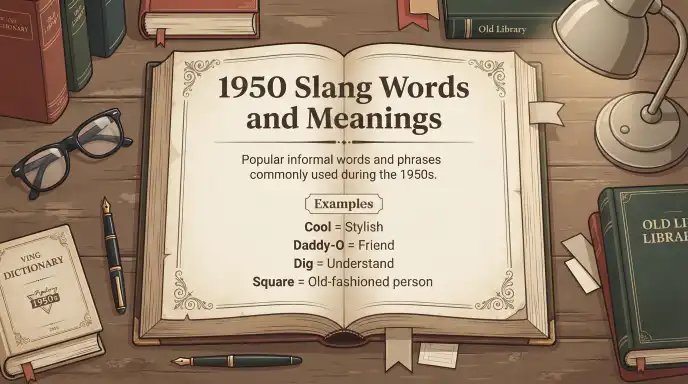
1950 slang words and meanings offer a fascinating glimpse into the language, culture, and everyday life of the 1950s.
People often search for these vintage expressions when watching classic movies, reading historical novels, attending retro-themed events, or simply satisfying their curiosity about how people spoke during that era.
The 1950s was a decade shaped by rock and roll, classic cars, diners, and teenage culture. As a result, many colorful slang terms became part of everyday conversations. While some of these words have disappeared over time, others have survived and are still recognized today.
Quick Answer
1950 slang words and meanings refer to the informal words and phrases that were commonly used during the 1950s to describe people, fashion, music, cars, and everyday situations. Most were playful, friendly, and reflected the unique culture of the decade.
What Are 1950 Slang Words and Meanings?
1950 slang words are informal expressions that became popular throughout the 1950s, especially among teenagers and young adults. These words made conversations more lively and helped people express personality, humor, and style.
Unlike today’s internet slang, 1950s slang developed through music, movies, television, schools, diners, and everyday social life.
What Makes 1950 Slang Unique?
The language of the 1950s reflected a rapidly changing society. Young people wanted expressions that felt modern and exciting, leading to the creation of many memorable slang terms.
Common influences included:
- Rock and roll music
- Hollywood films
- Television shows
- Classic diners
- Car culture
- High school life
Why People Still Search for 1950 Slang?
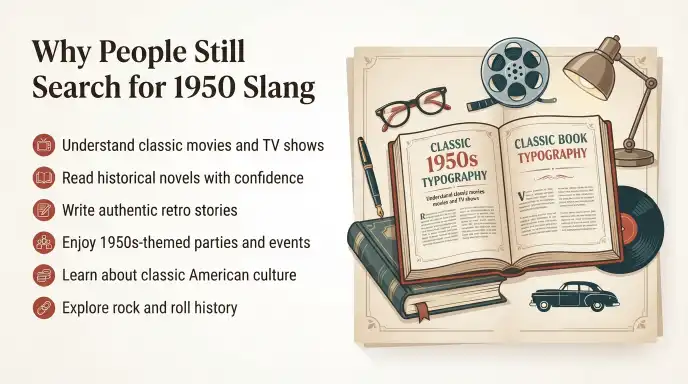
People continue searching for these expressions because they:
- Want to understand classic movies
- Write historical fiction
- Attend retro parties
- Study American history
- Enjoy vintage fashion and culture
Full Definition of 1950 Slang
1950 slang refers to the collection of informal words and phrases widely used during the 1950s to describe emotions, people, clothing, music, cars, relationships, and everyday experiences.
Unlike abbreviations or texting language, these expressions reflected the social trends and youthful energy of post-war America.
Many words were humorous, creative, and easy to remember, making them popular among friends and classmates.
Popular 1950 Slang Words and Meanings
The table below includes some of the most popular slang words people used during the 1950s.
| Slang Word | Meaning | Example |
| Cool | Stylish, impressive, or excellent | “That new car is cool.” |
| Daddy-O | A friendly way to address someone | “Thanks, Daddy-O!” |
| Cat | A fashionable or interesting person | “He’s one cool cat.” |
| Hep Cat | Someone who follows the latest trends | “Only hep cats know that band.” |
| Square | Someone who is boring or old-fashioned | “Don’t be such a square.” |
| Dig | To understand or appreciate | “I dig your style.” |
| Threads | Clothes or outfit | “Nice threads today!” |
| Bread | Money | “I need more bread.” |
| Jalopy | An old, worn-out car | “His jalopy still runs.” |
| Cruisin’ | Driving around for fun | “Let’s go cruisin’ tonight.” |
| Dreamboat | A very attractive person | “Everyone thought he was a dreamboat.” |
| Doll | An attractive young woman | “She’s a real doll.” |
| Blast | A great time | “The party was a blast.” |
| Burn Rubber | Drive very fast | “He burned rubber leaving the parking lot.” |
| Made in the Shade | Everything is going well | “Now we’re made in the shade.” |
| Ginchy | Excellent or wonderful | “That song is ginchy!” |
| Ankle Biter | A small child | “The ankle biters are playing outside.” |
| Knock Yourself Out | Go ahead and enjoy yourself | “Want more cake? Knock yourself out.” |
| Greaser | A teenager known for slick hair and leather jackets | “The movie featured a group of greasers.” |
| Back Seat Bingo | Kissing or being romantic in a parked car | “The old movies joked about back seat bingo.” |
Is 1950 Slang Offensive or Neutral?
Most 1950 slang words and meanings are considered harmless today. They were mainly used to sound fun, stylish, or friendly rather than to insult people.
Neutral Expressions
Many famous 1950s slang words are completely safe to use in casual conversations or when discussing history.
Examples include:
- Cool
- Daddy-O
- Dig
- Threads
- Cruisin’
- Blast
- Dreamboat
These expressions are friendly and suitable for most audiences.
Slang That May Sound Outdated
Some slang reflected the attitudes and social norms of the 1950s. While these words were acceptable at the time, they may sound old-fashioned today.
Always use historical slang in the right context, especially when writing about the past.
Where Were 1950 Slang Words Commonly Used?
The slang of the 1950s spread through everyday life and popular entertainment. Unlike modern internet slang, these expressions developed through face-to-face conversations.
Rock and Roll Culture
Music helped popularize many slang terms. Teenagers often copied words used by singers and musicians.
Hollywood Movies
Classic films introduced millions of people to fashionable expressions that quickly became popular.
Television Shows
As television became more common, slang spread rapidly across the country.
High Schools
Teenagers created and shared new slang with classmates, making schools one of the biggest sources of new expressions.
Diners and Soda Shops
Young people spent time at diners, where new slang naturally became part of everyday conversations.
Car Culture
The popularity of classic cars inspired expressions related to driving, cruising, and automobiles.
Real-Life Examples of 1950 Slang
Understanding the tone behind each expression makes it much easier to recognize and use correctly.
Friendly Conversation
Emma: “You’re one cool cat.”
Jack: “Thanks! I appreciate that.”
This is a friendly compliment for someone who is stylish or fun.
Casual Conversation
“Let’s go cruisin’ after school.”
This means driving around for fun without any specific destination.
Giving a Compliment
“Those threads look fantastic.”
Here, threads simply means clothes.
Encouraging Someone
“Knock yourself out!”
This expression politely tells someone to go ahead and enjoy themselves.
Talking About Money
“I finally earned enough bread to buy a new record player.”
In this sentence, bread means money.
Origin and Background of 1950 Slang
The rise of 1950 slang words and meanings was closely connected to the social and cultural changes that happened after World War II. During this decade, teenagers had more freedom, new forms of entertainment became popular, and American culture began influencing many parts of the world.
Instead of using formal language, young people created fun expressions that reflected their interests, music, fashion, and daily lives.
Rock and Roll Shaped Everyday Language
The growing popularity of rock and roll music introduced new words into everyday conversations. Musicians and fans often used catchy expressions that quickly spread among teenagers.
Television Expanded Slang Across America
By the mid-1950s, television had become a common part of family life. Sitcoms, variety shows, and commercials helped popularize slang far beyond local communities.
Cars Became Part of Youth Identity
Owning or driving a car represented freedom for many teenagers. As a result, words like cruisin’, burn rubber, and jalopy became widely recognized.
Hollywood Influenced Fashion and Speech
Movies starring popular actors inspired young people to copy not only hairstyles and clothing but also the slang used on screen.
Comparison with Similar Slang
Although many 1950s expressions are no longer common, several have modern equivalents.
| 1950s Slang | Modern Slang | Meaning |
| Cool | Awesome | Something impressive |
| Daddy-O | Bro | Friend |
| Dig | Get it | Understand |
| Threads | Fit / Outfit | Clothes |
| Bread | Cash | Money |
| Cat | Dude | Person |
| Square | Boring | Someone who isn’t trendy |
| Blast | Great time | Fun experience |
The meanings are often similar, but today’s slang reflects modern culture instead of life in the 1950s.
Why People Used 1950 Slang
People used slang because it made conversations more expressive and enjoyable. It also helped young people create their own identity.
To Sound Fashionable
Using the newest slang showed that someone kept up with popular trends.
To Fit In
Teenagers often used slang to feel connected with friends and classmates.
To Express Personality
Many expressions were humorous and energetic, making conversations more memorable.
To Reflect Youth Culture
Slang became part of the music, fashion, and lifestyle that defined the decade.
Impact of Using Slang in Communication
Slang made everyday conversations feel more relaxed and personal.
Some benefits of using 1950 slang include:
- Adds personality to conversations
- Makes historical stories feel authentic
- Helps readers understand classic films and books
- Creates a nostalgic atmosphere
- Makes retro-themed events more enjoyable
However, using too much vintage slang today may confuse people who are unfamiliar with these expressions.
Is It Safe for Social Media?
Yes. Most 1950 slang words and meanings are family-friendly and suitable for modern social media posts.
People often use them when sharing:
- Vintage fashion photos
- Classic car pictures
- Retro party moments
- Historical facts
- Old Hollywood content
- Rock and roll memories
Since these expressions are generally positive, they are appropriate for platforms like Instagram, Facebook, and Pinterest when discussing vintage culture.
When Should You Avoid Using 1950 Slang?
Although these expressions are fun, they are not suitable for every situation.
Avoid using 1950 slang in:
- Professional business emails
- Academic papers
- Legal documents
- Medical communication
- Formal presentations
- Serious workplace discussions
Using standard English is usually the better choice when clear communication is important.
Polite Alternatives
If you want a more modern way to express the same idea, consider these alternatives.
| 1950 Slang | Modern Alternative |
| Daddy-O | Friend |
| Cool Cat | Nice person |
| Threads | Clothes |
| Bread | Money |
| Dig | Understand |
| Blast | Great time |
| Square | Traditional person |
| Dreamboat | Attractive person |
These alternatives are easier for today’s audiences to understand.
Frequently Asked Questions
Q1. What are 1950 slang words and meanings?
They are informal expressions that people commonly used during the 1950s to describe people, fashion, music, cars, and everyday life.
Q2. What does “Daddy-O” mean?
“Daddy-O” is a friendly nickname for a man or friend. It became popular through jazz and early rock-and-roll culture.
Q3. What does “square” mean in 1950s slang?
A square is someone considered boring, conventional, or unwilling to follow new trends.
Q4. Is 1950 slang still used today?
A few words like cool remain common, but most 1950s slang is now used mainly in retro events, movies, books, and historical discussions.
Q5. What does “dig” mean in slang?
Dig means to understand, appreciate, or enjoy something.
Q6. Why do people still like 1950 slang?
Many people enjoy it because it reflects classic American culture, vintage fashion, rock and roll, old movies, and a nostalgic way of speaking.
Q7. What words were used in the 1950s?
Popular 1950s slang words included cool, Daddy-O, dig, square, cat, threads, bread, dreamboat, and cruisin’. These expressions reflected the music, fashion, and youth culture of the decade.
Q8. What did they call girls in the 1950s?
Girls were often called doll, chick, or babe as friendly or affectionate slang terms. The meaning depended on the situation and relationship between the speakers.
Q9. How did they say “cool” in the 50s?
People often said cool, ginchy or neat to describe something impressive or fashionable. These words were common in everyday conversations during the 1950s.
Conclusion
1950 slang words and meanings provide a unique window into one of the most memorable decades in modern history. From timeless expressions like cool, dig, and Daddy-O to colorful phrases about cars, fashion, and friendships, these slang terms capture the energy and optimism of the 1950s.
While many of these expressions are no longer part of everyday conversations, they continue to appear in classic films, historical novels, vintage events, and retro-themed social media content.
By understanding their meanings and the context in which they were used, you can better appreciate the language, culture, and lasting influence of this iconic era.
Discover More articles:
- FUPA Slang: What It Means and How People Use It Online
- Faded Slang Meaning: Definition, Uses and Examples
- What Does DN Mean in Slang? Online Uses, and Examples

Hi, I’m Rachel Simmons, a language writer specializing in American English and modern slang. I research regional expressions, everyday phrases, and evolving word meanings across the United States. I enjoy making complex language trends simple, practical, and easy for everyone to understand.