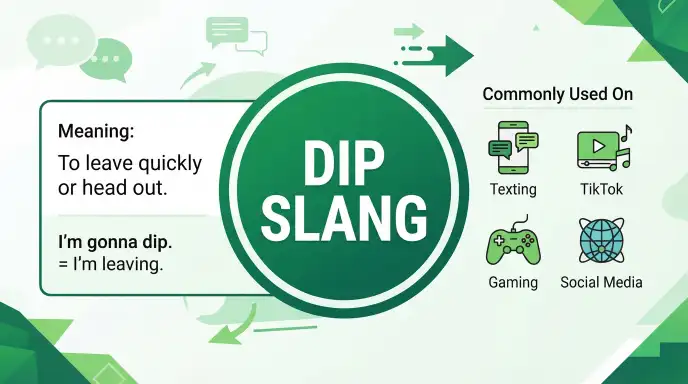
Dip slang means to leave quickly or casually, and in some contexts, it can also refer to someone acting foolishly. If you’ve seen someone text, “I’m gonna dip,” or heard the word in a TikTok video, game, or everyday conversation, you may wonder what it really means.
Today, dip slang is widely used in texting, social media, gaming, and casual conversations. While its most common meaning is to leave or head out, the exact meaning depends on the context and tone.
Understanding how people use the word can help you avoid confusion and communicate more naturally. In this guide, you’ll learn the dip slang meaning, where it’s commonly used, its origin, real-life examples, and when it’s appropriate to use.
Quick Answer: Dip in Slang
Dip slang usually means to leave a place quickly or casually. It is a popular informal expression used in texting, social media, gaming, and everyday conversations.
What Does Dip Slang Mean in Text?
When someone says “dip” in a text or online message, they are usually talking about leaving.
Instead of saying “I’m leaving,” people often say:
- I’m gonna dip.
- Let’s dip.
- Time to dip.
The slang sounds casual and friendly. It is commonly used between friends and in relaxed conversations.
The Most Common Meaning
The most common meaning of dip slang is:
To leave, go away, or exit quickly.
It does not always mean someone is running away. Often, it simply means they are ready to leave.
For example:
- It’s getting late. I’m gonna dip.
- Let’s dip before traffic starts.
- I’ll dip after this game.
In these examples, dip simply replaces words like leave, go, or head out.
Another Meaning of Dip Slang
Sometimes dip is used to describe someone who is acting foolishly.
For example:
- Don’t be such a dip.
- He acted like a complete dip.
In this case, the word is usually playful rather than extremely offensive. Friends may joke with each other using this meaning, but it can still sound rude if used with strangers or in serious conversations.
Context Changes the Meaning
The meaning of dip depends on how it is used.
| Phrase | Meaning |
| I’m gonna dip. | I’m leaving. |
| Let’s dip. | Let’s go. |
| Don’t be a dip. | Don’t act foolishly. |
| He dipped early. | He left early. |
Reading the whole conversation makes it easier to understand which meaning the speaker intends.
Full Form / Definition of Dip Slang
Unlike internet abbreviations such as LOL or BRB, dip is not an acronym.
Does Dip Have a Full Form?
No.
Dip does not stand for other words or have an official full form. It is simply an English word that has developed additional slang meanings over time.
People sometimes search for:
- dip full form
- dip meaning slang
- what does dip stand for
The answer is the same:
Dip does not stand for anything. In slang, it mainly means to leave quickly, while less commonly it can refer to someone acting foolishly.
Simple Definition
A simple definition is:
Dip (slang): To leave a place quickly or casually; sometimes used to describe someone acting silly or unintelligent.
This definition matches how most people use the word today in texting and everyday conversation.
Is Dip Slang Rude, Offensive, or Neutral?
The answer depends on how the word is used.
Most of the time, dip is completely neutral.
If someone says:
- I’m gonna dip.
- Let’s dip.
- We dipped after dinner.
there is nothing rude about it. It simply means they are leaving.
When It Is Neutral
The word is friendly in situations like:
- texting friends
- casual conversations
- gaming chats
- social media captions
- family conversations
People often use it instead of saying:
- I’m leaving.
- I’m heading out.
- I’m going home.
When It Can Sound Rude
Using dip as a noun to insult someone can sound disrespectful.
Examples include:
- “You’re such a dip.”
- “Quit being a dip.”
Although this version is usually mild compared with stronger insults, it may offend someone depending on your relationship and tone.
Is It Offensive?
Generally:
- ✅ Safe in casual conversations
- ✅ Common among friends
- ✅ Acceptable on social media
- ⚠️ Avoid using it as an insult with people you do not know well
Because tone matters, the same word can sound funny in one conversation and rude in another.
Where Is Dip Slang Commonly Used?
You can find dip slang in many everyday conversations, both online and offline.
Text Messages
Friends often use dip when ending a conversation or letting others know they are leaving.
Examples:
- I gotta dip now.
- I’ll dip after dinner.
Social Media
People use dip in captions, comments, and short videos.
Common platforms include:
- TikTok
- Snapchat
- X (formerly Twitter)
It usually describes leaving a place, ending an event, or making a quick exit.
Gaming
Gamers sometimes say:
- I’m gonna dip after this match.
- He dipped before the final round.
Here, it simply means someone left the game or stopped playing.
Everyday Speech
Outside the internet, many English speakers naturally use dip in conversations with friends.
Examples include:
- Let’s dip before it rains.
- We’re dipping after the movie.
Because the slang has been around for many years, it feels natural in everyday informal English rather than being limited to online culture.
Real-Life Examples of Dip Slang
The meaning of dip slang becomes much easier to understand when you see it in real conversations. Below are examples showing different tones and situations.
Friendly Conversation
Friends often use dip when they are ready to leave.
Example 1
Alex: Everyone’s heading home.
Mia: Yeah, I’m gonna dip too.
Example 2
Ryan: Want to stay longer?
Jake: Nah, I should dip before it gets late.
The tone is relaxed and friendly.
Casual Texting
In text messages, dip is a quick way to say you’re leaving.
Example 1
Friend: Are you still here?
You: No, I dipped about ten minutes ago.
Example 2
Friend: Movie’s over.
You: Cool, let’s dip.
Argumentative Tone
Sometimes dip is used to tell someone to leave.
Example 1
Just dip if you’re going to keep complaining.
Example 2
If you don’t like it here, then dip.
Here, the word sounds more direct and may come across as rude depending on the speaker’s tone.
Gaming Context
Gamers often use dip when leaving a match or voice chat.
Example 1
I have school tomorrow, so I’m gonna dip after this round.
Example 2
Our teammate dipped before the final boss.
Social Media Context
On social media, dip usually means leaving an event or situation.
Example 1
We dipped before the crowd got impulsive.
Example 2
Time to dip
The meaning is simple, casual, and easy to understand.
Origin and Background of Dip Slang
The word dip has existed in English for centuries with meanings related to moving downward or briefly going into something.
Its slang meaning developed much later.
How Did “Dip” Come to Mean “Leave”?
In American English, dip began to be used informally to mean leave quickly or make a fast exit. The expression became more common in everyday speech during the late 20th century.
People liked it because it was short, memorable, and easy to say.
Over time, phrases like these became common:
- “Let’s dip.”
- “I dipped early.”
- “We’re about to dip.”
Today, these expressions are widely understood by English speakers.
How Social Media Increased Its Popularity
Platforms such as TikTok, Instagram, Snapchat, YouTube, and online gaming communities helped spread dip slang to younger audiences.
Creators and streamers often use the word naturally, making it part of everyday internet language.
As a result, many people now recognize dip even if they rarely use it themselves.
Comparison with Similar Slang
Many slang words have a meaning similar to dip, but each has its own tone and level of formality.
| Slang Term | Meaning | Tone | Common Usage |
| Dip | Leave quickly | Casual | Texting, social media, everyday speech |
| Bounce | Leave | Friendly | Friends, texting |
| Head out | Leave | Neutral | Everyday conversations |
| Jet | Leave quickly | Informal | Casual speech |
| Roll out | Leave together | Relaxed | Friends and groups |
| Take off | Leave | Neutral | Daily conversation |
Which One Should You Use?
Choose the slang based on the situation.
- Dip sounds modern and casual.
- Bounce feels playful.
- Head out is more polite.
- Take off works in both casual and professional conversations.
- Roll out often suggests leaving with other people.
Although these words are similar, dip remains one of the shortest and most commonly used options.
Why People Use Dip Slang
People like dip slang because it is quick, natural, and easy to understand.
Instead of saying:
- I’m going to leave now.
many people simply say:
- I’m gonna dip.
The shorter phrase feels more relaxed and conversational.
Reasons People Use It
- It saves time while texting.
- It sounds casual and friendly.
- It fits everyday conversations.
- It is widely understood by younger speakers.
- It feels more natural than formal language.
Because of these benefits, dip has remained popular for many years.
Impact of Using Dip Slang in Communication
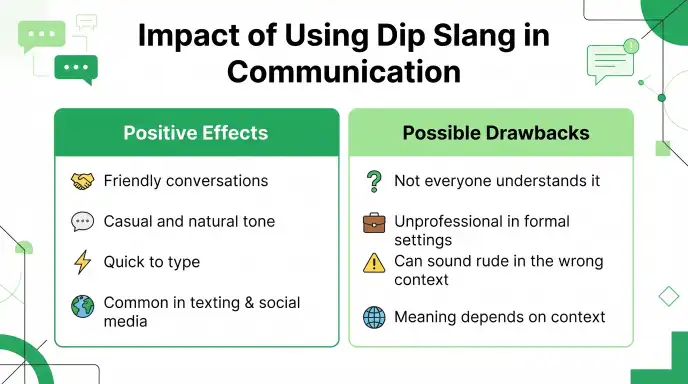
Slang can make conversations feel more personal and natural.
Using words like dip helps speakers sound relaxed and approachable, especially among friends.
Positive Effects
- Makes conversations feel friendly.
- Creates a casual atmosphere.
- Helps people connect through shared language.
- Keeps messages short and easy to read.
Possible Drawbacks
Not everyone understands slang.
Older adults, non-native English speakers, or people in professional settings may misunderstand words like dip.
For that reason, it is always helpful to think about your audience before using slang.
Is Dip Slang Safe for Social Media?
Yes. In most situations, dip slang is completely safe to use on social media.
It is commonly seen in:
- TikTok captions
- Instagram comments
- Snapchat messages
- Discord chats
- Reddit discussions
- Gaming communities
- Group texts
When It Is Appropriate
You can safely use dip when talking about:
- Leaving an event
- Ending a conversation
- Going home
- Exiting a game
- Saying goodbye casually
Examples include:
- I’m gonna dip now.
- We dipped before the rain started.
- Time to dip.
When to Be Careful
Avoid using dip as an insult toward someone.
For example:
- “You’re such a dip.”
Although it is considered a mild insult, it can still hurt someone’s feelings or create unnecessary conflict online.
When used respectfully, dip slang is a harmless and widely accepted part of modern informal English.
When to Avoid Using Dip Slang
Although dip slang is common and generally harmless, it is not suitable for every situation. Knowing when to avoid it helps you communicate more clearly and professionally.
Professional Settings
Avoid using dip in formal emails, business meetings, or workplace conversations.
Instead of saying:
- I’m gonna dip after lunch.
You could say:
- I’ll leave after lunch.
- I’ll head out after lunch.
These alternatives sound more professional.
Academic Writing
School assignments, research papers, and official reports should use standard English instead of slang.
For example, write:
- The students left the classroom.
instead of:
- The students dipped.
Speaking With People Who May Not Know the Slang
Some people, especially non-native English speakers or older adults, may not understand what dip means.
In those cases, using words like leave, go, or head out avoids confusion.
During Serious Conversations
If the topic is emotional or important, slang can sound too casual.
For example, saying:
- I’m gonna dip.
during a serious discussion may seem disrespectful or dismissive.
Choose your words based on the situation and the people involved.
Polite Alternatives to Dip Slang
If you want a more neutral or professional way to say dip, here are some good alternatives.
| Alternative | Best Used In |
| Leave | Formal and informal conversations |
| Head out | Friendly conversations |
| Go | Everyday situations |
| Take off | Casual conversations |
| Exit | Professional or written communication |
| Be on my way | Polite conversations |
| Make my way home | Friendly conversations |
These phrases communicate the same idea without using slang.
Frequently Asked Questions
Q1. What does dip slang mean?
Dip slang usually means to leave quickly or casually. In some situations, it can also refer to someone acting foolishly, but this meaning is less common.
Q2. What does dip stand for in slang?
Dip does not stand for anything. It is not an acronym or abbreviation. It is simply an English word that has gained informal slang meanings over time.
Q3. Is dip slang rude?
Usually, no. Saying “I’m gonna dip” is friendly and casual. However, calling someone “a dip” can sound insulting depending on your tone and relationship with that person.
Q4. Where is dip slang commonly used?
You can commonly see dip slang in:
- Text messages
- TikTok
- Snapchat
- Discord
- Gaming chats
- Everyday conversations
It is especially popular in informal communication.
Q5. Can I use dip in professional conversations?
It is better not to. In professional settings, use words like leave, head out, or depart instead of dip.
Q6. Is dip slang still popular?
Yes. Dip continues to be widely used in casual English, especially in texting, social media, and conversations among friends. Although it is not a new slang term, it remains common and easy to understand.
Q7. What does dip mean in Gen Z slang?
In Gen Z slang, dip usually means to leave quickly or head out. For example, “It’s getting late, let’s dip” means “Let’s leave.”
Q8. What is dip in texting?
In texting, dip means to leave a conversation, place, or event, often in a casual or friendly way. Someone might text, “I gotta dip now,” meaning they’re signing off or going home.
Conclusion
Dip slang is a simple and widely used informal expression that most often means to leave quickly or casually. It does not have a full form, and its meaning depends on the context in which it is used. While it can occasionally be used as a mild insult, the most common use is simply to describe leaving a place.
Because dip slang is popular in texting, social media, gaming, and everyday conversations, understanding its meaning can help you communicate more naturally. Just remember to consider your audience and the situation.
In casual settings, dip sounds friendly and relaxed, while in formal or professional communication, choosing standard alternatives like leave or head out is usually the better option. By using the word appropriately, you can keep your conversations clear, natural, and respectful.
Explore More Related Articles:

Hi, I’m Tyler Brooks, a writer specializing in Gen Z culture and internet slang. I track trending terms across TikTok and social media to explain their real-world meanings. My goal is to provide clear, accurate, and up-to-date definitions that help readers understand modern online language.